
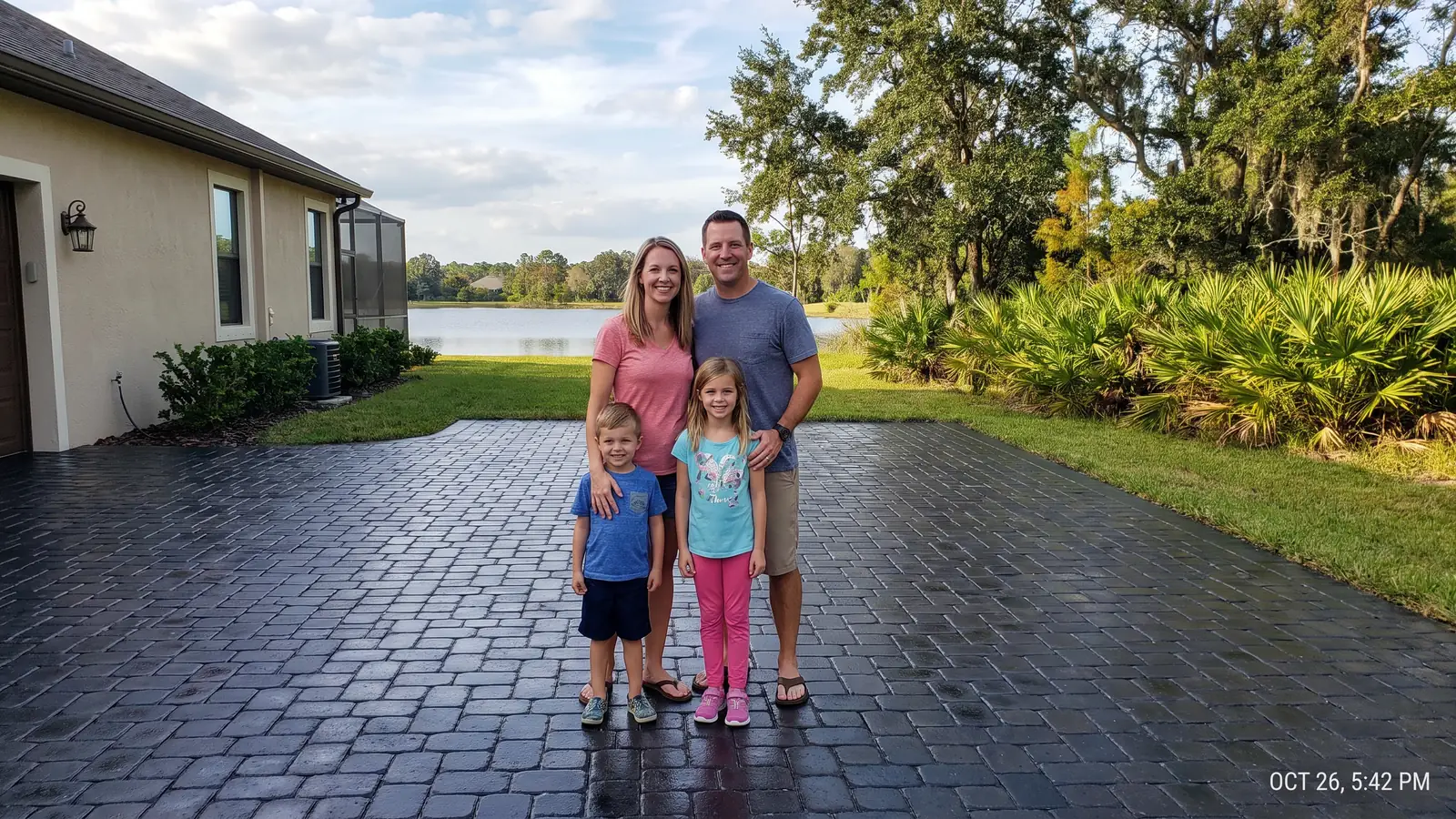
Paver sealing for Fruit Cove homes
Paver Sealing in Fruit Cove, FL
Fruit Cove pavers under the oaks along State Road 13 can be sealed; call (904) 736-4863 for a free estimate.
- Brings out deeper paver color
- Fresh joint sand helps lock pavers in place
- Gives weeds less room to grow
- Makes the surface easier to keep clean
- Free estimate, no obligation
Request a Free Estimate
Free, no obligation.
Fast, careful paver sealing in Fruit Cove
Fruit Cove homeowners can get paver sealing priced at no charge, whether the job is a drive, a walk, a patio or a pool deck. A local contractor cleans the surface, fills the joints with sand and applies the sealer so the color lasts. Expect an answer in 1 business day or less, and often much sooner, once you ask for a free estimate.
If your home sits under the big oaks, you know the routine: leaves, acorns and a green edge that comes back every season. A proper wash, new sand and a coat of sealer reset the surface to one clean tone. Call (904) 736-4863, tell the contractor what your pavers look like today and ask whatever you wish. There is no obligation.
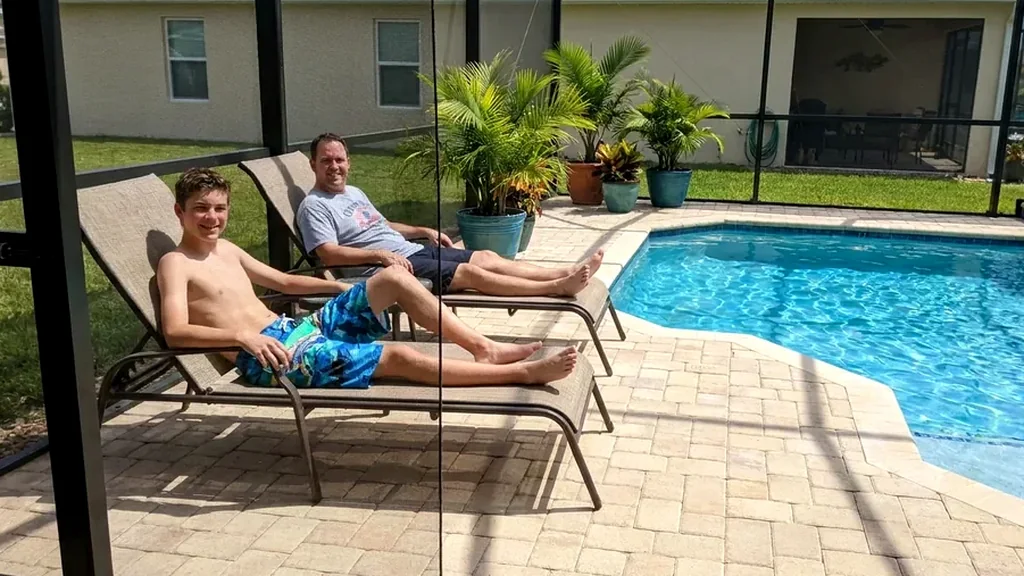
Why hire a local paver sealing contractor in Fruit Cove?
Fruit Cove sits under old oaks and over wet ground, and its homes range from 1990s streets to newer communities. A local paver contractor can tell which fits your lot, so ask for a free estimate and ask whatever is on your mind.
Look before you pay
A contractor inspects your Fruit Cove pavers and quotes a price in advance. Saying no is perfectly fine.
The going range
Jacksonville-area companies list $1.75 to $3.25 per square foot to clean, sand and seal, a fair measure for any Fruit Cove bid.
Film or penetrating
A film sealer comes in matte, satin or wet look. A penetrating one leaves the look almost unchanged.
You set the date
New pavers can wait before sealing, and wet weather can push a day back. The schedule is yours to approve.
Get Your Free Estimate in Fruit Cove
Tell us about your pavers in Fruit Cove.
Free, no obligation
What paver problems show up most in Fruit Cove?
Oak shade and the leaf drop
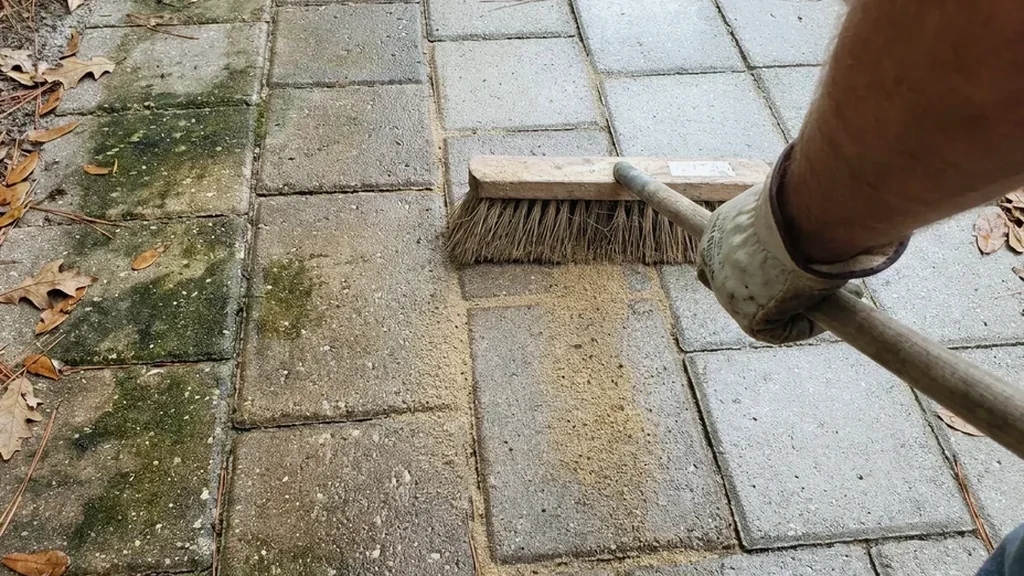
State Road 13 is known for canopy oaks that overhang the road, and Beluthahatchee Park is ringed by live, laurel and water oaks. The extension service at UF/IFAS reports that water oak acorns leave stains on concrete and that live oaks can spread 60 to 120 feet. Under that cover, a Fruit Cove drive can pick up dark specks and a green rim. Laurel oak leaves do not fall until early spring, so the cleanup does not stop. Sealer would trap it all, so washing comes first. The green usually begins on the shady side of the house. The river road runs about 17 miles from the Julington Creek Bridge, with oaks along much of it.
Ground that stays wet
The USDA describes the St. Johns soil series, first described in this county, as poorly drained, with the water table within 15 inches of the surface for 20 to 50 percent of the year. Wet ground and shade keep pavers damp longer. Because a coat will not cure over moisture, a careful contractor may hold off a day after rain. A shaded patio can take much longer to dry than a sunny drive. The soil figure is county-level, so the contractor looks at your own lot before planning a date. Beluthahatchee Lake was made in 1945 by damming Mill Creek, so water is part of the landscape.
Pavers from the 1990s and 2000s
In Fruit Cove, 83.6 percent of homes went up between 1970 and 1999 per NeighborhoodScout, and Fruit Cove Estates began in 1991. Durbin Crossing went up mostly between the mid-2000s and the 2010s. A drive from either era may carry a coat of unknown age. A water-based sealer never goes over a solvent-based one, so the contractor checks first. Many homes look alike because they are about the same age, which means neighbors may share a schedule. Neighbors on the same street may share the same schedule.
Joint sand that washes out
The St. Augustine area gets about 50.6 inches of rain a year, with a hot, wet season from May through October and intense but brief summer downpours. Rain that arrives all at once can wash sand out of paver joints. Open joints widen, soil settles in and weeds start. Refilling the joints belongs in any proper job.
Rust from sprinkler water
UF/IFAS warns that irrigating with iron-rich Florida well water can leave orange stains on hard surfaces. Sprinklers fed by a well may leave rust-colored fans on Fruit Cove pavers wherever the spray lands. They need treatment first, because the coat would seal them in. Tell the contractor where the sprinklers reach, since nudging a head can end new streaks. Old orange marks may lighten only part way.
Is sealing pavers in Julington Creek Plantation different from Fruit Cove Estates?
Somewhat, since the two were built in different decades. Fruit Cove Estates dates to 1991, with homes built between 1990 and 2004, and a neighborhood guide describes spacious homes and lush yards. Durbin Crossing went up mostly between the mid-2000s and the 2010s, and Julington Creek Plantation covers about 4,120 acres along Race Track Road. Name your neighborhood when you ask for a free estimate, and the contractor can plan around its age.
Older streets may have older sealer, or none, and newer streets may have pavers that are still young. A neighborhood guide also lists Lakes At Mill Creek and Mill Creek Landing, along with rural lots outside any named subdivision, where a drive can run long. A contractor can plan for each kind of property, and the plan starts with a short visit. Call (904) 736-4863 and mention your street.
Julington Creek Plantation has a community development district, and many Fruit Cove neighborhoods have owners associations. Under Florida law, section 720.3035, an association may review the look of an improvement, within the limits of its covenants. Planning a new color or finish? Check with the association, then ask for a free estimate.
What does paver sealing cost in Fruit Cove?
Your price comes from three things: square footage, lost sand and the coat already on the pavers. Companies around Jacksonville commonly publish $1.75 to $3.25 per square foot to clean, sand and seal. A wide drive and a pool deck add up even at a steady rate. For a figure that fits your lot, ask for a free estimate, and the estimate is free.
Oak stains and wet ground can stretch a job. Rust marks and green growth take extra washing, and a sunken spot is repaired before sealing, since a coat would freeze the dip in place. New pavers may wait their turn. Call (904) 736-4863 to learn which of these apply to your Fruit Cove home.
| Paved area | Typical example | Clean, sand and seal |
|---|---|---|
| 300 sq ft | Small patio or walkway | $525 to $975 |
| 600 sq ft | Two car driveway | $1,050 to $1,950 |
| 1,000 sq ft | Large driveway or pool deck | $1,750 to $3,250 |
| 1,500 sq ft | Driveway plus pool deck | $2,625 to $4,875 |
Math based on the $1.75 to $3.25 per square foot that Northeast Florida paver companies publish. Your contractor sets the actual price after seeing the surface. Repairs, leveling and stripping failed sealer are usually extra.
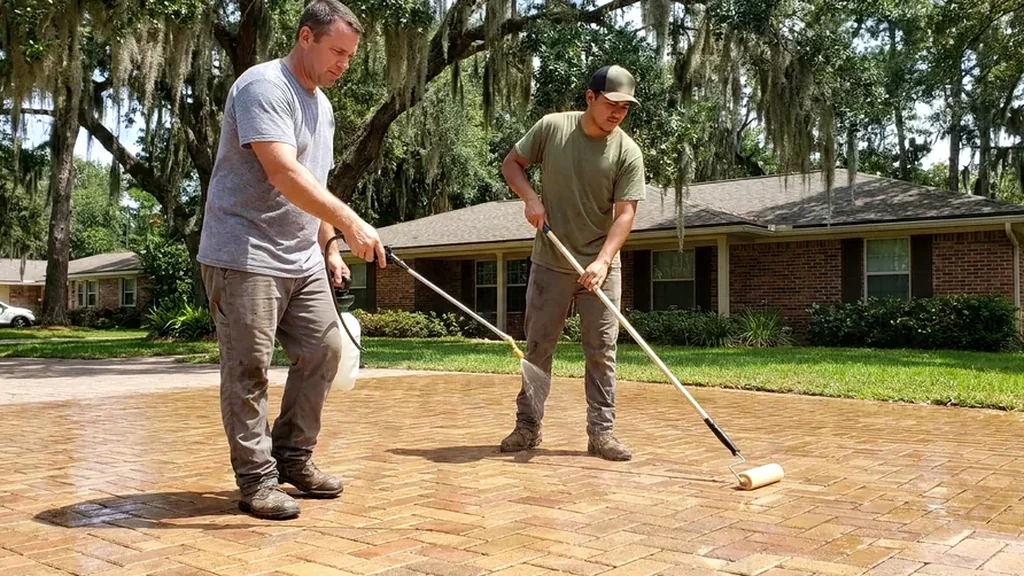
How does a paver sealing job work in Fruit Cove?
Read the age and the shade
The contractor walks your pavers, noting stains, shade and low or lifted spots. You will be asked how old they are. Brand-new pavers can wait 60 to 90 days, while older ones may wear a coat put down by someone else. Photos and notes go into the written quote, so the final bill holds no surprises. The last stop is the apron by the garage and the front steps. If an oak overhangs the drive, the notes say so.
Wash off leaf film and green growth
Washing strips dirt, algae and leaf film off the surface and out of the seams. Acorn marks and rust lines get extra attention, and older stains may need a second pass. Rinse water is steered away from shrubs and siding. Any grime left on the pavers would be locked under the sealer. A clean surface lets you see the true paver color before you pick a finish.
Fill the joints with sand
The wash empties the seams, so new sand is worked in before any sealer. Dirt and weeds find their way into joints that stay open. Every joint gets filled, and then the surface is swept. Joint sand can be chosen to match the pavers. Bare seams take longer to fill than half-full ones. Sand color can be chosen to blend with the pavers.
Wait until the pavers are dry
A coat needs dry pavers. Rain is heaviest here from May to October, often in brief storms, and shaded, low ground can stay wet. The contractor reads the pavers, not only the forecast. One more day of drying beats sealing damp pavers, and a day or two of delay is normal in the wet season. A drive in open sun can be ready the same day, while the patio under the oaks waits.
Apply the sealer and let it cure
The sealer is applied last, in your chosen finish. A company in St. Augustine says cars can go back on a fresh coat after 24 to 72 hours. Foot traffic often comes back sooner. Ask how long the product you chose needs, and let it cure fully before heavy use. Plan on leaving the cars at the curb for the first night.
Complete paver services in Fruit Cove
Start with the surfaces. Drives collect tire wear and leaf drop, walks and patios under the canopy hold moisture, and pool decks need grip as well as shine. The contractor measures each one and prices it. Describe what you have when you ask for a free estimate.
Sealer types differ. A film sealer sits on top and can be matte, satin or wet look, while a penetrating sealer soaks in and leaves the look almost unchanged. An old coat limits the choice. Call (904) 736-4863 for advice on your pavers.
Four stages make up the work: wash, re-sand, dry, seal. The wash comes first because leaf film and algae must not be trapped. Fresh sand follows, and the sealer waits until the pavers are bone dry. To learn how long that takes at your address, call (904) 736-4863.
Summer is hot and wet from May through October, so a coat date can slip. Winter is the driest time of year, which leaves more room for the work. A clear week is worth grabbing. To find a date that suits your street, ask for a free estimate.
Questions to ask before you hire
- My HOA approved a certain look. Can the finish match it?
- Is the washing, joint sand and sealer all in one price?
- Will the written estimate name the sealer and the square footage?
- Will a certificate of insurance reach me ahead of the start date?
- How is the paver area measured before I get a price?
- How many coats of sealer will my driveway get?
- Where the pavers have sunk, do they get lifted and leveled first?
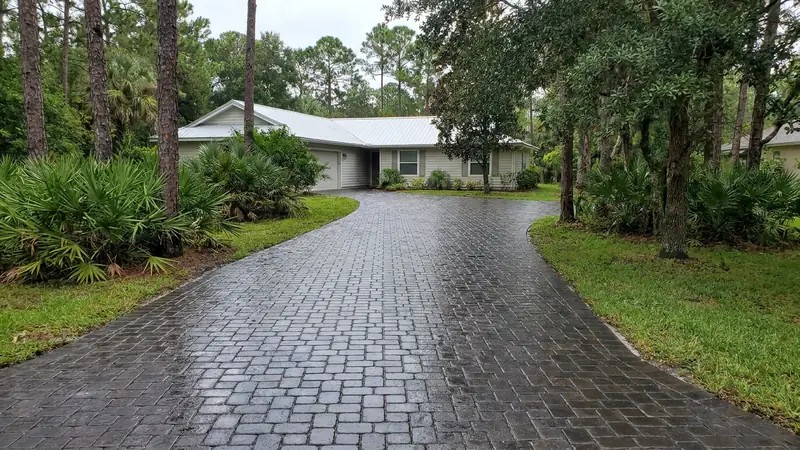
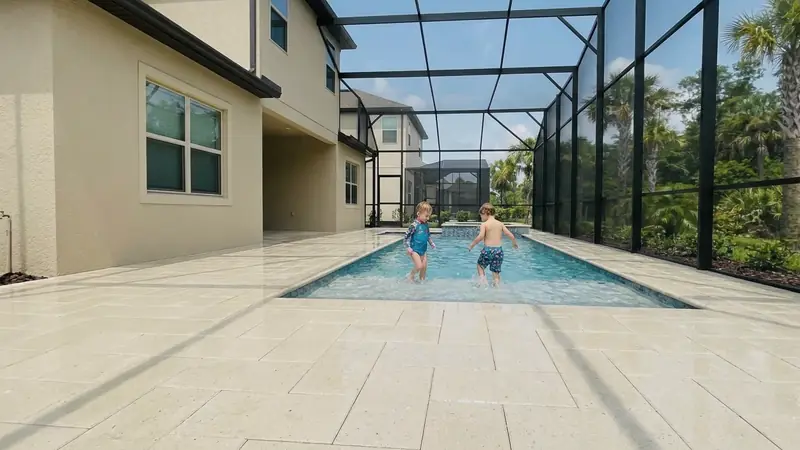
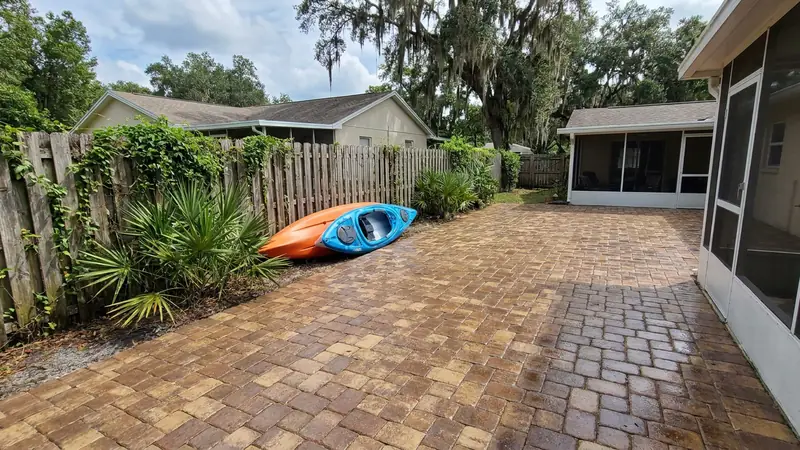
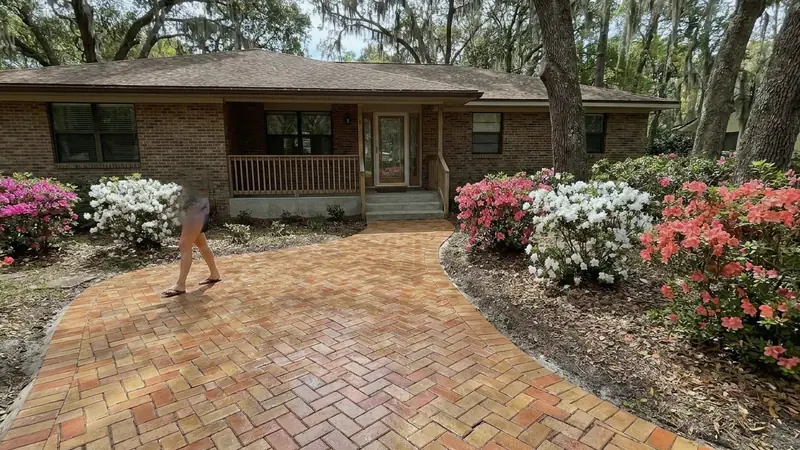
What do sealed pavers look like around Fruit Cove?
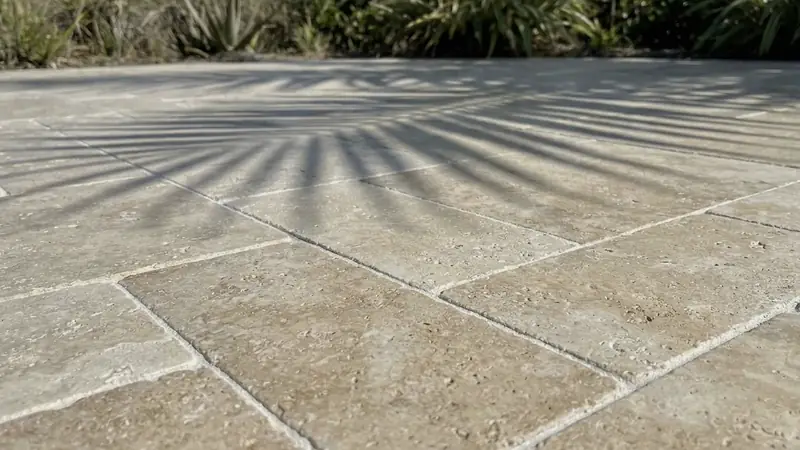
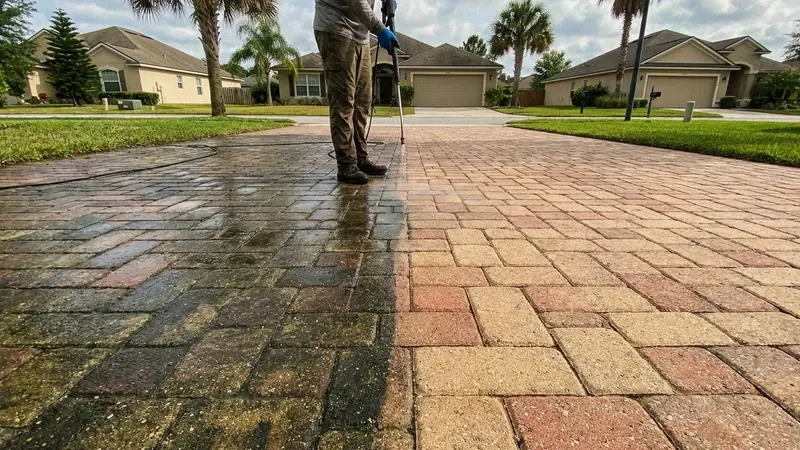
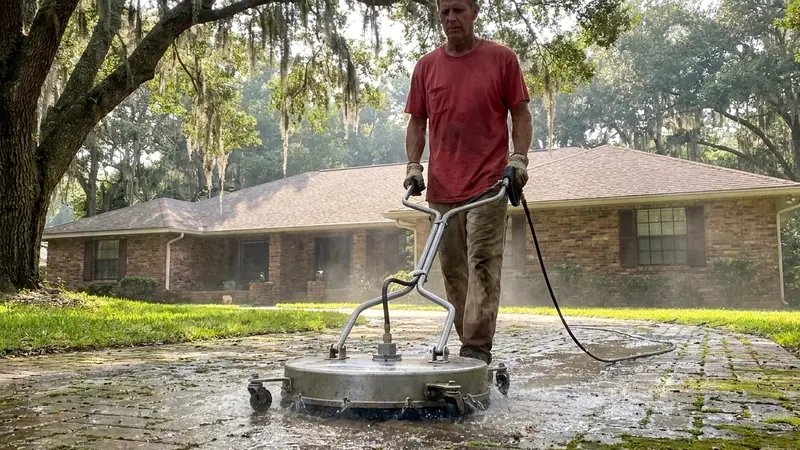
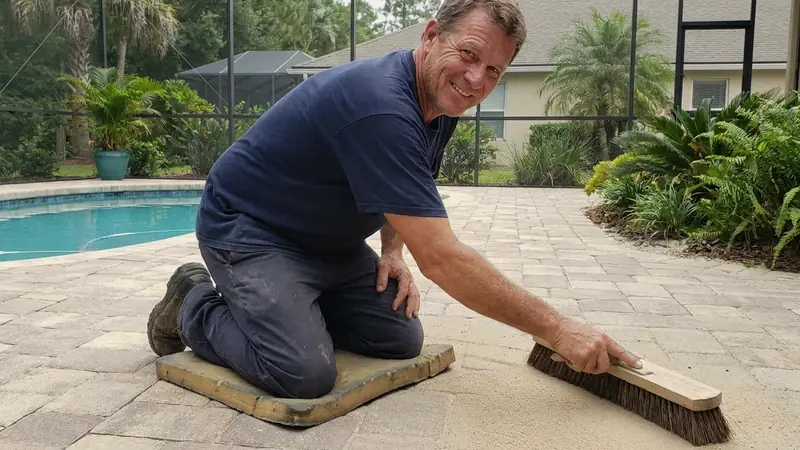
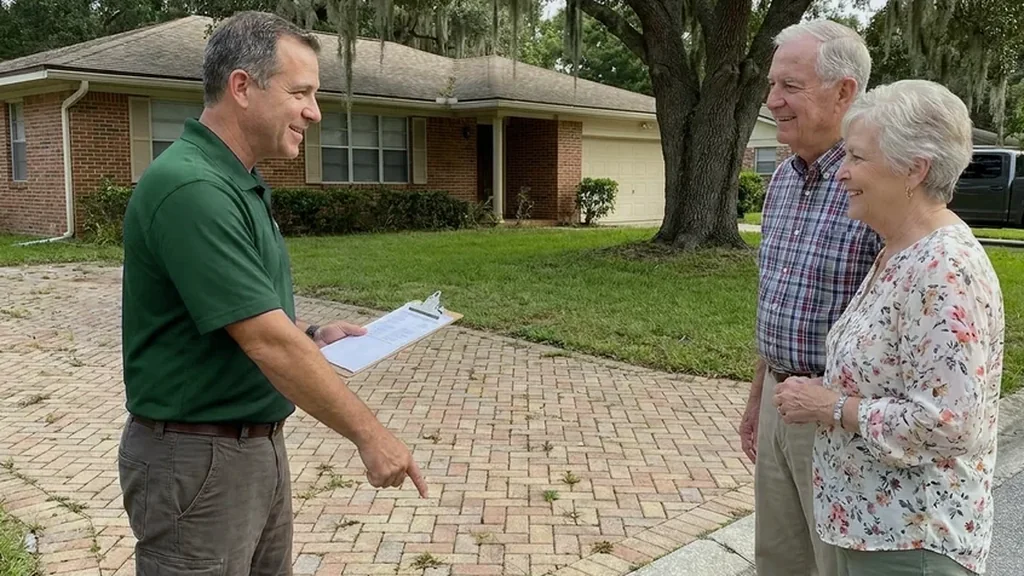
Why local matters in Fruit Cove
Fruit Cove contractors know their oaks. The canopy along State Road 13 and the oaks around Beluthahatchee Park show how much shade this area holds. That shade shapes cleaning and drying time, and a local contractor plans for it before the first quote. To reach one who works under them, call (904) 736-4863.
Local work also means knowing the ground. In this county the soil can hold water close to the surface for much of the year. Damp pavers dry slowly, so a local contractor allows for it when picking a date, and does not push a job through a wet week. You can ask for a free estimate and point out any wet spots on your lot.
A local contractor also expects owners associations and community districts. Julington Creek Plantation has a community development district, and many neighborhoods have rules about color and finish. Asking early saves a letter and keeps the job on schedule, which suits everyone on the street. Call (904) 736-4863 and share what your covenants cover.
How did Fruit Cove get its name?
It was named for the orange groves that once covered the area, and early settler Theophilus Wilson Moore set up an orange plantation here in 1873. The Moremen family helped make Fruit Cove a citrus shipping hub. Alpine Groves Park, on State Road 13, began as an orange plantation in the early 1900s. If you live near the river road, call (904) 736-4863.
State Road 13, the William Bartram Scenic and Historic Highway, runs about 17 miles under canopy oaks from the Julington Creek Bridge. Beluthahatchee Park sits beside a lake made in 1945 by damming Mill Creek, and Marywood Retreat Center is also in Fruit Cove. The population was 29,362 in 2010 and 32,143 in 2020. If you live near one of them, ask for a free estimate and give the contractor your street.
Frequently Asked Questions
What does it cost to get pavers cleaned and sealed in Fruit Cove?
Companies across Northeast Florida commonly publish $1.75 to $3.25 per square foot for the whole job of cleaning, sanding and sealing. On a Fruit Cove lot the total shifts with square footage, lost sand and any coat already on the pavers. Have the area written into the quote. Ask for the drive, walk and pool deck to be listed apart. Pavers that need repair or heavy stain work add time before the sealer goes on. Look for the sealer by name on the quote. Fruit Cove is about 24 miles south of downtown Jacksonville, and its yards vary widely.
Why is paver sealing so expensive?
One visit holds several jobs. The pavers get washed, the joints get refilled, the surface has to dry, and only then does the sealer go on. Every stage takes labor and product. A fair quote names each stage, and you can hold it up against the published range. Ask for the stages by name.
Is it good to seal pavers in Florida when summers are as wet as Fruit Cove's?
Yes, for most pavers. A coat slows stains, keeps joint sand where it belongs and makes later washing easier. Fruit Cove has oak shade, leaf drop and a hot, wet summer, which are all reasons to keep a coat on. One visit shows if yours are ready. Fruit Cove pavers under the canopy tend to show it first. The St. Augustine area averages about 50.6 inches of rain a year.
Is there a downside to sealing pavers on a Fruit Cove drive?
Two things count against it: upkeep and timing. A coat wears down and must be renewed, a wet look scuffs sooner than matte, and the surface has to be dry first. Sealing new pavers too early can trap moisture inside. Even so, a drive with daily traffic is a good fit. For a pool deck, ask about a grip additive.
Is winter a better season to seal pavers in Fruit Cove?
Often, yes. NOAA averages quoted for the St. Augustine area show about 2.32 inches of rain in November against 7.18 inches in August and September. Sealer needs a dry surface, so the drier months leave more room to work. New pavers should still wait about 60 to 90 days before a coat.
Will oak leaves and acorns stain my Fruit Cove pavers?
They can. Per UF/IFAS, acorns from water oaks can stain concrete wherever they fall. The contractor cleans these marks first, since sealer would lock them in. A few old stains never fully lift, so ask the contractor for an honest outcome. Fresh sand in the seams helps afterward. A film coat or a penetrating one can follow the wash. Oaks along the river road are a good example.
What is the difference between a film sealer and a penetrating sealer?
A film sealer sits on the surface and can come in matte, satin or wet look. A penetrating sealer soaks in and leaves the look almost unchanged. A company in St. Augustine says cars can go back on a fresh coat after 24 to 72 hours. Ask which type suits your pavers and why. A penetrating sealer is often chosen when the owner wants the same look.
How long will a coat of sealer last in Fruit Cove?
Most quotes from companies land between two and five years per coat. Heavy shade, leaf drop and daily tires can pull a drive toward the short end. Ask which product went on, so a later coat can match. Water that beads is a sign the coat still works. A quick visit is the surest way to know. The orange groves that gave Fruit Cove its name once covered the area, and oaks line the river road today.
Ready for a Free Estimate in Fruit Cove?
Call (904) 736-4863 and tell us about your pavers.
Free, no obligation